
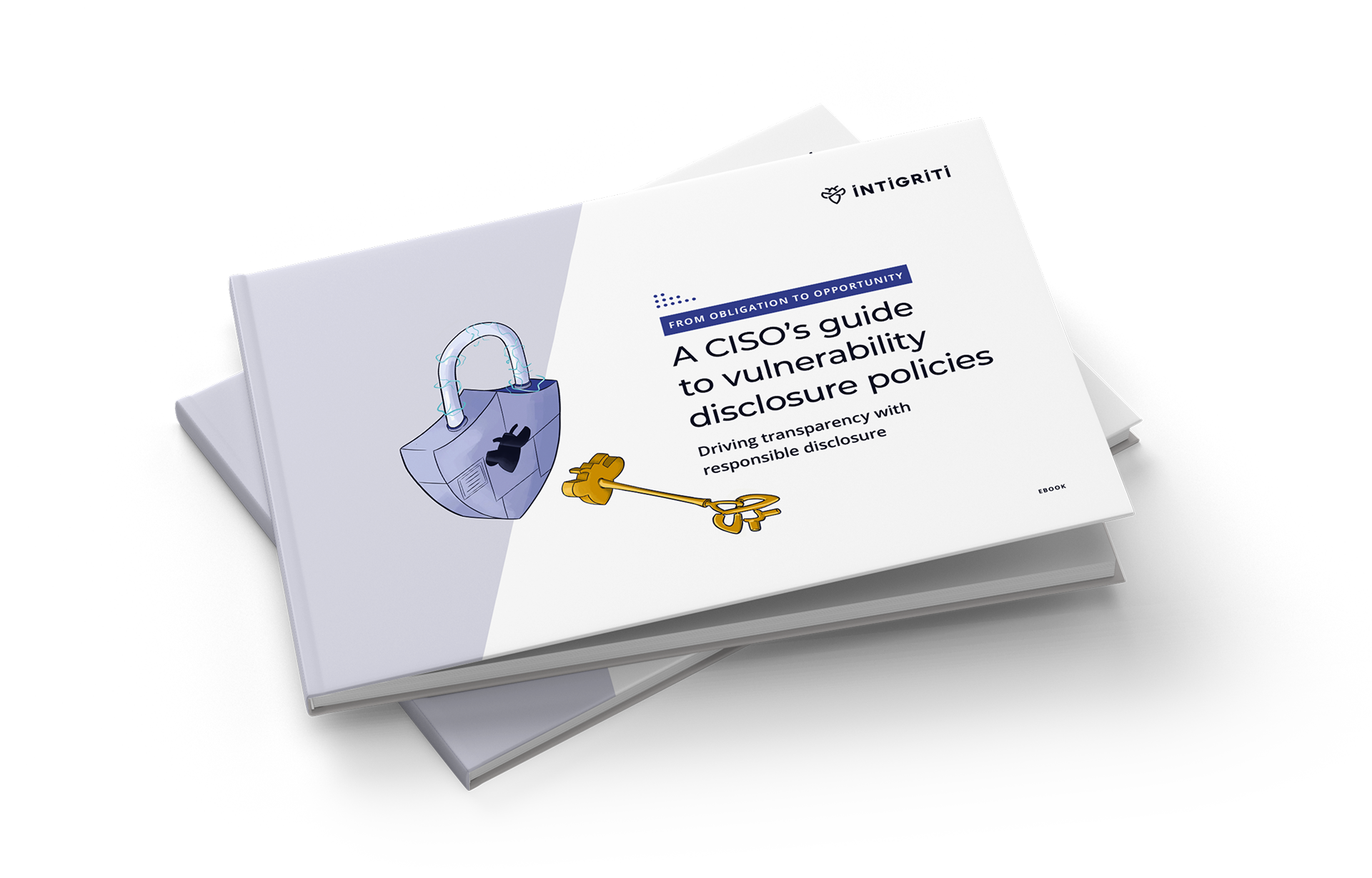
A CISO’s Guide to Vulnerability Disclosure Policies
Vulnerability disclosure policies help organizations turn external security reports into structured, responsible remediation workflows.
This guide explains how CISOs can design, host, and operationalize a VDP that strengthens transparency, supports compliance, and builds trust with the security community.
Accelerate and streamline your response to security vulnerabilities
Download your free copy to:

Understand how a vulnerability disclosure policy creates a clear framework for receiving, assessing, and remediating security reports.

Learn why 44% of vulnerability submissions may not be successfully reported when organizations lack a clear disclosure process.

Discover how safe harbor language, transparent rules of engagement, and clear communication encourage responsible reporting.

See how a VDP can contribute to GDPR, ISO 27001, NIST, PCI DSS, HIPAA, PSD2, PSTI, and other security frameworks.

Get practical guidance on scope, reporting channels, acknowledgement, validation, remediation, disclosure, and legal considerations.

Compare the benefits and limitations of hosting a VDP on your website versus using a bug bounty platform.

It's no longer enough to merely react to incidents as they occur; we must anticipate and preempt potential vulnerabilities before they can be exploited. This is where Vulnerability Disclosure Policies emerge as a critical anchor in our defense strategy.
Stijn Jans
CEO


Turn responsible disclosure into a security advantage
Deploying a VDP will help lower the risk of a vulnerability not reaching your security team or getting published publicly (such as on social media).